GT Voice: Open mindset required for West to accelerate transition to clean energy

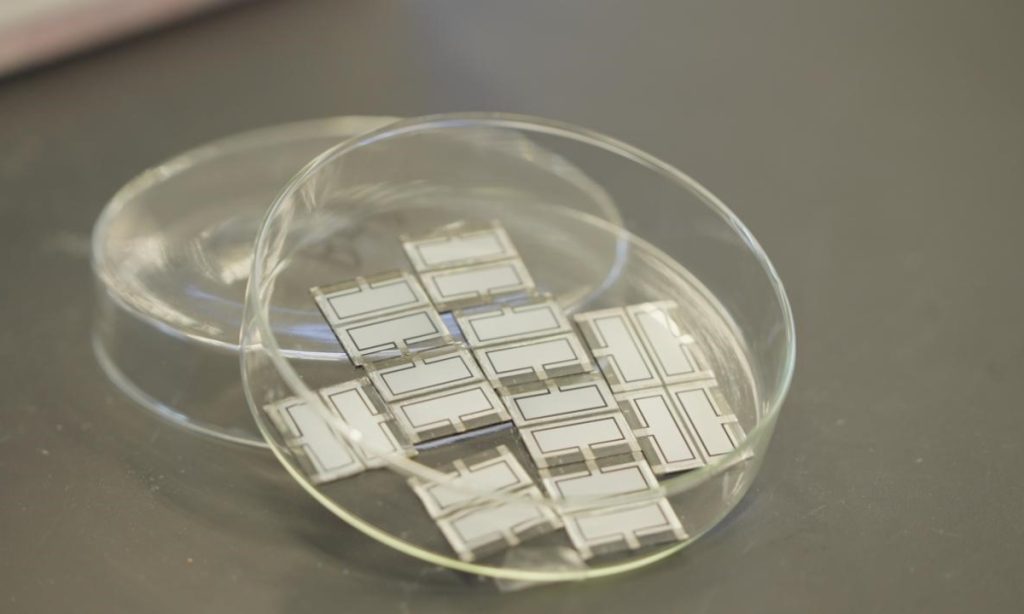
With the global energy system under strain, a new report has found that clean electricity is increasingly meeting growth in demand.

Clean power sources grew fast enough to meet all new electricity demand in 2025, thereby preventing an increase in fossil generation, according to the Global Electricity Review 2026 by London-based energy think tank Ember, released on Tuesday.

The report indicated that record growth in solar, especially in China and India, was a driving factor for clean energy generation rising faster than global demand for electricity.

The message from this report is clear: the transition to green energy has become an irreversible global trend. Clean electricity growth outpacing the increase in demand signifies that renewable energy has reached the inflection point at which it begins to replace traditional fossil fuels. This milestone reaffirms the growing certainty of the global energy transition.

What is particularly noteworthy is the remarkable vitality demonstrated by developing countries in this process. China has achieved leapfrog development in solar energy, leveraging large-scale deployment, an efficient implementation pace, and the advantage of a complete industrial chain. 

According to Ember's report, China accounted for more than half of the global increase in both solar capacity and solar generation in 2025. This pushed the share of solar and wind in China's generation mix to 22 percent, surpassing the OECD average of 20 percent. 

India also ramped up clean power deployment. Renewable generation growth doubled its previous record, and India installed more new solar capacity than the US for the first time. These facts clearly indicate that the core of the energy transition lies not in slogans, but in the ability to act and execute in the present.

However, in the face of the achievements of developing countries in the clean energy field, some Western commentators have persisted in prejudice and wariness, even concocting such narratives such as "China Shock 2.0," groundlessly politicizing and ideologizing normal industrial progress and market cooperation. 

These voices turn a blind eye to the fact that China has supplied vast quantities of cost-effective solar panels and other key components, driving down the global cost of solar electricity considerably over the past decade and making clean energy affordable for a growing number of both developing and developed nations.

In the long race of energy transition, speed determines who will gain the initiative. Those who take the lead in technological innovation, industrial supporting facilities, and project deployment are bound to reap the benefits of sustainable development. 

From this perspective, the core challenge facing developed economies such as those in Europe and the US in their clean energy transition is not the choice of technological routes, but the speed of deployment. 

The International Renewable Energy Agency has said that total global renewable power generation capacity will need to triple by 2030 to reach more than 11, 000 gigawatts under the agency's 1.5 degree C scenario in the World Energy Transitions Outlook, with solar photovoltaic and wind power accounting for about 90 percent of renewable energy capacity additions.

The cost curve of clean energy equipment has dropped significantly over the past decade, largely driven by large-scale production and technological iteration. China's capacity expansion in the solar energy sector has objectively provided the world with a more economical solution. 

For Western countries, this means they can achieve higher emission reduction goals with lower fiscal input, and efficiently allocate the saved resources to key transition links such as power grid upgrading, energy storage supporting facilities, and demand-side management. 

But if political prejudice or protectionism leads to rejecting more cost-effective technologies and equipment, or to erecting artificial trade barriers that raise the cost of clean energy, the ultimate losers will be such countries' own energy transitions and the interests of their consumers.

An open and inclusive attitude, together with smooth and efficient cooperation, is precisely what guarantees a faster transition. If Western countries can view China's role in the green supply chain with a more open mind, the global deployment of clean energy will only accelerate, benefiting not only developing nations but also the West's own climate goals and economic well-being. 

The transition is already irreversible, and those who embrace cooperation rather than confrontation will be the ones to lead the way toward a sustainable future.

‘Our vote will stand the test of history’: Chinese envoy after vetoing UN Security Council draft resolution on the Strait of Hormuz

The UN Security Council on Tuesday local time failed to adopt a draft resolution that "strongly encourages" states interested in the use of commercial maritime routes in the Strait of Hormuz to coordinate efforts of a defensive nature to contribute to ensuring the safety and security of navigation across the Strait of Hormuz, including through the escort of merchant and commercial vessels, according to the Xinhua News Agency. 

Eleven members of the Security Council voted in favor of the draft resolution, China and Russia voted against it, while Colombia and Pakistan abstained. The draft resolution was proposed by Bahrain in coordination with fellow Gulf Cooperation Council members Kuwait, Oman, Qatar, Saudi Arabia and the United Arab Emirates, as well as with Jordan, Xinhua reported. 

In his explanation of the vote, China's permanent representative to the United Nations Fu Cong said that the draft resolution failed to capture the root causes and the full picture of the conflict in a comprehensive and balanced manner.

“China attaches great importance to the draft resolution submitted by Bahrain on behalf of Gulf States. We fully understand their serious concerns. We are committed to solving the issue properly, and we have participated constructively in the consultations,” Fu said.

Under the current circumstances, this draft resolution should clearly identify the root causes of this conflict, seek appropriate solutions to address the root causes and ensure the safety and security of shipping lanes, and strive to promote dialogue and achieve peace, the Chinese envoy noted. 

“It is regrettable, however, that the draft resolution fails to capture the root causes and full picture of the conflict in a comprehensive and balanced manner. It contains one-sided condemnation and pressure, the characterization of the situation as threat to international peace and security, as well as the use of armed escorts. Such language is highly susceptible to misinterpretation or even abuse,” Fu stated.

In responding to claims made by the US representative, Fu said that “we are much more convinced now that China’s position is objective and impartial, reflecting the image of a responsible major country that upholds international fairness and justice. Our vote will stand the test of history.”

The merits of this conflict are crystal clear, Fu said, adding that the US and Israel, without authorization from the Security Council and while negotiations between Iran and the US were underway, launched military strikes against Iran. This is in clear violation of the purposes and principles of the UN Charter and the basic norms of international relations, he added. 

“China does not go along with Iran’s attacks on Gulf States and the blockade of the Strait of Hormuz. Like all parties, China hopes that peace and stability will be restored to the Strait as soon as possible and navigation will resume,” Fu said. 

The Chinese envoy also noted that China has made tremendous efforts to restore peace and stability in the Gulf and the Middle East. China has engaged in intensive consultations and mediation with relevant parties. China and Pakistan have issued a Five-Point Initiative for Restoring Peace and Stability in the Gulf and Middle East Region, calling for immediate cessation of hostilities, start of peace talks as soon as possible, security of non-military targets, security of shipping lanes, and primacy of the UN Charter.

“This is an open initiative and welcomes the response and participation by countries and international organizations,” Fu said. 

In a statement posted on its X account on Wednesday, the Permanent Mission of Iran to the UN said that Iran expresses its appreciation to China and Russia for their responsible conduct and today’s principled use of the veto in the UN Security Council.

“By blocking a flawed draft, they upheld the UN Charter and prevented the Security Council from being misused to legitimise U.S. aggression under the pretext of freedom of navigation in the Strait of Hormuz and the Persian Gulf,” the X post said. 
“They stood firmly on the right side of history.”

When Generation Z takes the pen: How Yuewen's skilled novelists are defining the next decade of Chinese web novels

In the glittering backstage of the 2025 Yuewen Global IP Awards in Macao, three young faces stepped into the spotlight. Born between 1997 and 2002, they lifted the "Rising Author of the Year" trophy together — a quiet but unmistakable symbol of a generational handover in one of China's most dynamic cultural industries. Their stories have already racked up blockbuster numbers on the Qidian Reading app, Yuewen's flagship platform. 

Behind the applause lies something deeper: a quiet change in Chinese online literature, driven by Generation Z creators who are rewriting the rules of storytelling for the next decade. This is not just a change of the guard. It is a fundamental shift in who tells China's stories — and how those stories speak to both domestic readers and the world. 

When China's online literature user base first surpassed 400 million in 2018, the dominant voices were still from the post-80s generation. Today, the picture has changed. On Yuewen's platforms, writers born after 1995 now account for 70 percent of contracted writers in 2025. 

Hou Xiaonan, CEO and President of Yuewen, captured the moment perfectly in an internal memo last year, when he launched the "Evergreen Content" strategy. Its core mission aims to build an ecosystem that supports generational renewal. 

"When Generation Z becomes the main creative force," Hou wrote, "the globalization and diversification of online literature will happen naturally." 

He Shou Yue Man Chi, born in 1998, is one of them. His breakthrough novel Just a Useful Pawn in the Stain Sect did not start with fireworks. The debut subscription was a modest 3,000. But the young author wrote with ferocious discipline — waking at 4 am and delivering 8,000 characters every day. 

The reason was starkly personal: his family had gone through a period of financial hardship. "When you owe one or two million yuan," he said calmly in an interview, "self-discipline comes naturally." 

The book eventually hit the industry record of 100,000 average subscribers on Qidian in just 165 days, and thanks to this success, he was able to clear the family debt in seven months. His real-life comeback reads like the ultimate "counterattack" trope his own readers crave.

If He Shou Yue Man Chi embodies gritty realism, 2002-born Ji Yue Ren represents an aesthetic rupture. A public administration student at South China Agricultural University, Ji once struggled with repeated rejections. To understand life better, he took a part-time job at a courier station. There he met a man who worked to pay for his father's medical bills — only for the father to pass away anyway. The encounter shattered Ji's view of fantasy writing. His novel Xuan Jian Xian Zu (The Immortal Mirror Clan) began modestly with 600 subscribers but eventually crossed the 100,000 mark on Qidian. In Ji's world, immortals age, die and fight bitterly over limited resources. Family fortunes rise and fall, spiritual roots are unequal and the heavens show no mercy. Gone is the effortless "everlasting victory" logic of classic web fiction. In its place is a haunting meditation on fate, loss and endurance. Veteran author Ma Boyong praised the work for its "epic sense of generational succession and relentless forward momentum." 

At the same awards ceremony stood 1997-born Canadian writer Awespec (real name D.D. Spec), the first foreign author to win Yuewen's Rising Author of the Year. Writing in English on the overseas platform WebNovel, his Genetic Ascension fuses Western fantasy structures with the classic Chinese "level-up and fight" progression system. He won a silver medal and a bronze medal at the WebNovel Spirity Awards.

Awespec explained he likes reading Chinese web novels, as he's fascinated by their world-building.

He is not alone. By October 2025, Yuewen's global platform WebNovel had nearly 400 million cumulative global users and had nurtured close to 530,000 creators and 820,000 original works from around the world. Among its signed authors, post-00s now account for 50 percent, while post-05s grew 55.9 percent year-on-year. 

Hou Xiaonan described the shift as moving from "content export" to "ecosystem export." Chinese web novels are no longer just translated outward; they are inspiring young creators everywhere to tell stories in their own languages using the emotional grammar China pioneered.

In 2025, Yuewen's platform attracted 400,000 new writers and generated over 800,000 new novels. The number of post-2000 writers earning over 1 million yuan annually surged by 150 percent. As another batch of post-00s writers uploaded fresh chapters late into the Shanghai night, the message was clear. This is not mere generational transition. It is a systemic transformation in creative philosophy, aesthetic standards and value systems. When young Chinese writers reinterpret "counterattack," "growth" and "power" through their own lived experience, online literature is undergoing a profound paradigm shift.

In giving Generation Z the pen and the platform, China's online literature has already begun writing its next decade — one authentic, ambitious and boundary-breaking chapter at a time.

31-day odyssey across three continents: Silence Wang’s Rise of Romance tour sets new record for Mandarin Music going global

On March 29, as the final encore faded at Singapore Indoor Stadium, Chinese singer-songwriter Silence Wang's Rise of Romance world tour came to an end. Spanning 31 days across Asia, North America and Oceania, covering five cities and 11 shows, the tour boasted sold-out performances at every stop, marking a landmark moment for original C-pop music's global reach.
The tour kicked off on February 27 with three consecutive shows at the Galaxy Arena in Macao Special Administrative Region (SAR), China.

It then headed to North America, where Wang performed two back-to-back sold-out shows at the Barclays Center in New York on March 7 and 8, attracting over 20,000 attendees in total.

This made him the first Chinese mainland singer to hold two fully sold-out concerts at this iconic venue.

The tour continued at Climate Pledge Arena in Seattle on March 14, followed by two performances at Rod Laver Arena in Melbourne, Australia on March 21 and 22, before concluding with a three-night finale at Singapore Indoor Stadium.

Notably, this world tour was not a mere replication of Wang's previous domestic concerts. According to the organizers, the stage design, visual presentation, and setlist for the overseas leg were exclusively made in order to deliver a unique musical experience for international audiences.

At the opening show in Macao, the production team incorporated custom large-scale installations to create an immersive stage.

In New York, a giant mechanical "key" served as the visual centerpiece, blended with elements of Eastern aesthetics.

Box office data reflected the enthusiastic response overseas. Public information shows that only one show was originally scheduled for New York, but tickets were sold out rapidly during the presale, prompting organizers to add a second show on March 8, which was also sold out immediately.

In Singapore, all three shows were sold out as soon as tickets were released.

Meanwhile, in Melbourne, Wang debuted his new album track My Answer for the first time globally, sparking a full-venue sing-along and demonstrating the instant appeal of original Mandarin Music in live overseas settings.

"True Chinese pop going global isn't about repeating past glory on foreign soil; it's about planting new trends there with our own hands," Wang explained.

Wang described the tour as telling the story before the establishment of "Romance City," a completely new narrative system.

From Macao to New York, Seattle, Melbourne and Singapore, this intercontinental route reflects a systematic exploration of how original Mandarin music is reaching the world - not only through online streaming platforms but also via high-quality offline performances that bring Mandarin Music production standards and cultural expression to international stages.

Wang firmly believes that "good music knows no time difference."

Whether through the giant mechanical "key" stage at the Barclays Center, the globalized rendition of medleys like "Ring of Time," "Soul of the Sword," and "Legends of the Three Kingdoms," or innovative adaptations of ballads such as "Moli" and "Her story" with local orchestral arrangements, he strives to present "a top-tier hand."

Industry observers note that Wang's world tour success signals a shift in Mandarin Music's global journey from "cultural display" to "market-oriented cultivation."

Moving forward, sustaining overseas influence beyond a single tour will require continued exploration.

But at least this spring, through 31 days of cross-continental travel, one Chinese singer-songwriter proved that good music has the power to traverse mountains and seas.

Ceasefire arrangements should help quell the war, FM says as Israel continues striking Lebanon and introduces uncertainty into peace talks

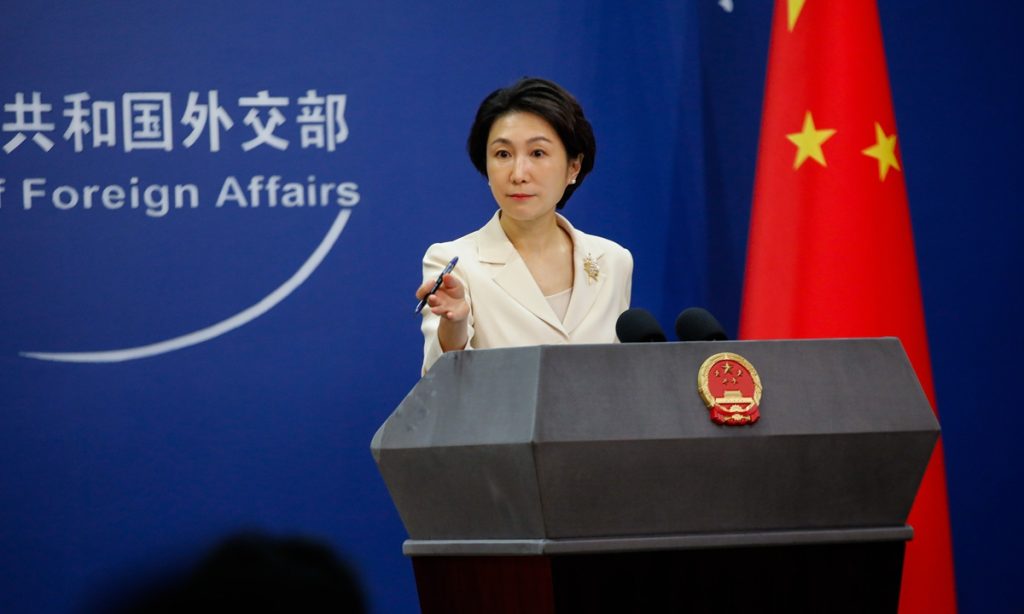
Ceasefire arrangements should help quell the war and restore peace and stability, Chinese Foreign Ministry spokesperson Mao Ning said in response to a question about a question about despite the temporary ceasefire announced by the US and Iran, Israel continues to carry out strikes in Lebanon.

China calls on all relevant parties to resolve disputes through political and diplomatic means, remain calm and exercise restraint, and work to ease tensions, Mao said, as the question noted that such actions, which violate the ceasefire agreement, have also introduced uncertainty into the peace talks between the US and Iran, and the Iranian side has stated that it will not participate in peace negotiations unless Lebanon is also included in the ceasefire arrangement.

Chinese FM meets envoys from EU, member states

Chinese Foreign Minister Wang Yi met with diplomatic envoys to China from the European Union (EU) and its member states on Wednesday in Beijing.

Wang, also a member of the Political Bureau of the Communist Party of China Central Committee, said that as this year marks the 50th anniversary of the establishment of diplomatic relations between China and the EU, the two major constructive forces in the world today should enhance mutual trust, handle differences properly, pool their strengths, and elevate the China-EU Comprehensive Strategic Partnership to a new level.

Wang put forward a three-point proposal for the future development of China-EU relations.

First, the two sides should uphold mutual respect, particularly by earnestly respecting each other's core interests and major concerns. Wang noted that achieving complete national reunification is the long-cherished aspiration and historic mission of the Chinese nation, and that China will never allow the Taiwan region to be separated from the motherland.

China hopes the EU will continue to adhere firmly to the one-China principle and oppose separatist activities for "Taiwan independence" in any form, he stressed.

Second, the two sides should adhere to the established positioning of their partnership. Wang said that China and the EU are partners, not rivals, and certainly not enemies.

There are no territorial disputes or geopolitical conflicts between China and the EU, let alone any fundamental clashes of interests, Wang said, noting that China hopes to work with the EU to make cooperation the prevailing trend of China-EU relations.

Third, the two sides should adhere to multilateralism. China firmly upholds the international system with the United Nations (UN) at its core, the international order underpinned by international law, and the basic norms of international relations based on the purposes and principles of the UN Charter, Wang said, noting that China consistently stands for peace talks and rejects the use of force.

The three global initiatives, the Belt and Road Initiative, and, particularly, the vision of building a community with a shared future for humanity -- all of which were proposed by Chinese President Xi Jinping -- have contributed China's wisdom and solutions to the international community.

"China and the EU should follow the trend of the times, enhance understanding, build trust, achieve mutual success, and light up the world," Wang added.

The head of the EU delegation to China and diplomatic envoys of EU member states to China said that China has always been an important partner for the EU.

The EU is willing to work hand-in-hand with China for the future, develop a constructive, stable EU-China relationship, address global challenges, uphold multilateralism, and promote world peace and security, they said.

Xi meets Senegalese PM

Chinese President Xi Jinping met with Prime Minister of Senegal Ousmane Sonko in Beijing on Friday.

Xi said that last September, he co-chaired the 2024 Summit of the Forum on China-Africa Cooperation in Beijing with President Bassirou Diomaye Faye, leading China-Africa relations into a new phase of jointly building an all-weather China-Africa community with a shared future for the new era.

Noting that China and Senegal are companions on the path to development and revitalization as well as good brothers, Xi said China is willing to work with Senegal to strengthen solidarity and cooperation, deepen their comprehensive strategic cooperative partnership, bring more benefits to the two peoples, and inject fresh impetus into China-Africa friendship and Global South cooperation.

Chinese vice premier calls for championing humanity's common values, promoting multipolar world

Chinese Vice Premier Ding Xuexiang on Friday called for championing humanity's common values, and promoting an equal and orderly multipolar world as well as universally beneficial and inclusive economic globalization.

Ding, also a member of the Standing Committee of the Political Bureau of the Communist Party of China Central Committee, made the remarks when delivering a speech titled "Championing Humanity's Common Values and Promoting a Multipolar World" at the plenary session of the 28th St. Petersburg International Economic Forum.

Ding said that a decade ago, Chinese President Xi Jinping noted in his speech at the General Debate of the 70th Session of the UN General Assembly that peace, development, equity, justice, democracy and freedom are the common values of all mankind and the lofty goals of the United Nations.

The important proposition transcends differences among different countries, ethnic groups, social systems and ideologies, drawing a value-based concentric circle for building a community with a shared future for mankind, and has received extensive support and positive responses from the international community, he added.

At present, global changes unseen in a century are accelerating, multiple risks are intertwined, and humanity is confronted with many common challenges, said Ding, calling for reviewing President Xi's important speech to steer the world toward a bright future of peace, security, prosperity and progress.

The Chinese vice premier put forward a four-point proposal.

First, uphold the concept of global governance featuring extensive consultation, joint contribution, and shared benefits. Promote equal rights, opportunities, and rules for all nations, and safeguard UN authority and international fairness.

Second, jointly build an open and pluralistic world economy. Take concrete steps to safeguard the multilateral trading system and international economic order, expand and fairly share the "pie" of economic globalization, and create more opportunities for Global South countries.

Third, advocate exchanges and mutual learning among civilizations. Respect the diversity of human civilizations, support all nations in exploring their own paths to realizing values, and oppose any "new Cold War" or ideological confrontation.

Fourth, safeguard global peace and development by building trust, settling conflicts, and enhancing security through dialogue, passing the torch of peace to future generations for lasting stability and common prosperity.

Ding stated that China and Russia are true friends who share weal and woe, and good partners for mutual success. Last month, President Xi paid a state visit to Russia and attended the celebrations marking the 80th anniversary of the victory in the Soviet Union's Great Patriotic War, he said, adding that the two heads of state agreed to further consolidate political mutual trust, strengthen strategic coordination, and jointly deliver a resounding stance for upholding the outcomes of World War II and international fairness and justice.

China is willing to work with Russia to elevate the China-Russia relationship to greater heights, broaden its dimensions, and strengthen its resilience, expand high-quality mutually beneficial cooperation, so as to better benefit the two peoples, said Ding, urging the two countries to strengthen coordination and collaboration on multilateral platforms such as the United Nations, and make greater contributions to building a more just, equitable, and prosperous multipolar world.

Ding said that despite the increasing impact of external shocks, China's economy has continued to show a positive trend, demonstrating robust vitality and resilience to the world.

China will expeditiously implement more proactive and effective macro policies, focus on stabilizing employment, enterprises, markets and expectations, and use the certainty of high-quality development to counter the uncertainties of the rapidly changing external environment, he said.

No matter how the external environment changes, China's door to opening up will only swing wider open, said Ding, adding that enterprises from all countries are sincerely welcome to invest and start businesses in China, actively participate in the process of Chinese modernization, and share China's development opportunities.

In the interactive session after the address, Ding responded to questions from the plenary session moderator on major-country relations and China-Russia cooperation in education and technology.

On the sidelines of the forum, Ding met respectively with Russian First Deputy Prime Minister Denis Manturov, Russian Deputy Prime Minister Alexander Novak, Russian oil company Rosneft's chief executive Igor Sechin, and Gazprom CEO Alexey Miller.

The two sides agreed to fully leverage the roles of the China-Russia Investment Cooperation Committee, the China-Russia Energy Cooperation Committee and the China-Russia Energy Business Forum, promote the high-quality development of investment and energy cooperation, and provide more impetus for the development of bilateral relations.

Ding also had brief and friendly conversations respectively with Indonesian President Prabowo Subianto, National Security Advisor of Bahrain Shaikh Nasser bin Hamad Al Khalifa, and South African Deputy President Paul Mashatile.